Why Old Attic Insulation Ruins Your Indoor Air Quality
Why Old Attic Insulation Ruins Your Indoor Air Quality
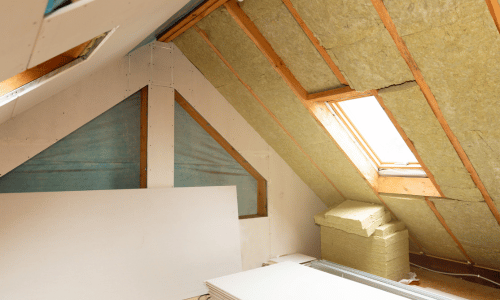
Old attic insulation causes more indoor air problems in San Diego County than most homeowners realize. In Escondido, that issue often overlaps with active or recurring rodent pressure. That is why attic rodent proofing in Escondido is often tied directly to indoor air quality complaints, stale vent air, allergy flareups, and musty odors that seem to have no clear source. When insulation has been sitting in an attic for 15, 20, or 30 years, it rarely stays clean, dry, and intact. It collects dust, absorbs moisture, traps rodent waste, and loses structure. Once that happens, the attic stops being an isolated space above the ceiling and starts acting like a contamination reservoir connected to the living area below.
That pattern shows up across 92025, 92026, 92027, and 92029. Homes near Lake Hodges, Daley Ranch, Escondido Creek, Hidden Meadows, Harmony Grove, and canyon-edge neighborhoods often face elevated roof rat pressure because San Diego’s Mediterranean climate supports year-round breeding conditions for roof rat (Rattus rattus). In practical terms, most attic contamination cases in North County are roof rat jobs, not house mouse jobs. Spanish tile roof architecture, clay tile roof lines, mature palms, citrus trees, ivy, and dense bougainvillea create a nearly perfect access route from yard to roofline to attic. Once rodents get inside, old insulation becomes their nesting field, waste zone, and scent map.
Why old insulation becomes an indoor air problem
Insulation ages even when no rodent activity is present. Fiberglass batts sag. Blown-in cellulose settles. Older materials compact around attic joists and leave thinner coverage over time. In pre-1990 homes in Mission Hills, North Park, La Mesa, and older parts of Escondido, original cellulose or vermiculite may still be present. In many houses, the real problem is not that the insulation looks dirty. The problem is that the material has been absorbing decades of dust, roofing debris, insect matter, and airborne residue while sitting directly above ceiling penetrations.
Those ceiling penetrations matter. Recessed lighting cans, plumbing stack openings, top plates, chase openings, bathroom exhaust duct gaps, and HVAC duct penetrations create leakage paths between the attic and the living area. That leakage path is often called the HVAC return air pathway problem. In plain English, the house pulls tiny amounts of attic air into the rooms below every time pressure changes across the building envelope. In homes with central HVAC systems, that movement becomes more noticeable when the air handler runs. If the attic contains settled insulation loaded with rodent droppings, urine residue, dust mite allergen accumulation, or mold spore contamination, those particles do not stay neatly above the ceiling.
That is one reason attic rodent proofing in Escondido has to be framed as more than a pest issue. If rodents are allowed to keep entering through roofline gaps or soffit vents, old insulation becomes a repeating contamination source. Cleaning the visible droppings without sealing access points does very little. The underlying air quality problem remains active because fresh waste and nesting material continue to build up.
Escondido and North County homes face a specific pressure pattern
Escondido sits in one of the most active attic service corridors in San Diego County. Interstate 15 and Highway 78 connect dense residential neighborhoods, newer subdivisions, older ranch homes, canyon-edge lots, and semi-rural properties in a tight service radius. That mix matters because different house types fail in different ways. Older homes in Old Escondido and nearby urban blocks often have aging insulation and multiple unsealed penetrations. Newer homes in 92029 and master-planned inland neighborhoods often have large attic footprints with attic-routed ductwork and more venting components that can become rodent entry points if screening or sealant degrades.
Inland heat adds another layer. Summer attic temperatures in Escondido, Poway, Rancho Bernardo, Scripps Ranch, Carmel Mountain, and El Cajon regularly push toward 130 degrees. At that temperature, urine-soaked insulation breaks down faster and odor compounds become more volatile. The attic begins to release a sharper smell profile, especially when HVAC systems cycle during hot afternoons. Compacted insulation also loses R-value, which means thermal resistance drops. That drives higher heat gain into the home and can increase energy bills at the same time indoor air quality gets worse.
A locally specific reality surprises many homeowners: in inland San Diego County, old insulation often becomes an air quality issue before it becomes an energy issue in the homeowner’s mind. People notice congestion, dusty vent air, or a sour attic odor first. Only later do they connect those symptoms to the insulation layer itself. In houses with active rodent access, attic rodent proofing in Escondido often becomes the turning point because it stops the contamination cycle at the source instead of treating the symptoms inside the rooms below.
Roof rats change what old insulation means
San Diego County is one of the strongest roof rat environments on the West Coast. Roof rat (Rattus rattus) activity dominates many attic calls from La Jolla and Encinitas to Escondido and Vista. Norway rat (Rattus norvegicus) and house mouse (Mus musculus) issues do appear, but roof rats are the species most often tied to upper-structure intrusion. They travel along fence lines, utility lines, tree limbs, roof edges, and stucco transitions. Once inside an attic, they build nesting sites in settled insulation, leave rat droppings on insulation surfaces, chew HVAC ducts, and create urine pheromone trails that attract repeat traffic.
Old insulation is especially vulnerable because it gives rodents an easy medium to tunnel, compress, and foul. Fresh insulation has structure. Very old insulation often has weak loft, patchy depth, and dust loading. That makes it easier for rodents to move through it and harder to sanitize effectively once contamination is widespread. Even after pest control companies place traps or bait, the attic can remain contaminated if entry point sealing never happened. This is why attic rodent proofing in Escondido needs to begin with species-aware exclusion work across rooflines, eave gaps, soffit vents, plumbing penetrations, electrical conduit penetrations, roof vents, and garage transitions.
Trap-and-bait programs remove some animals. They do not correct the building openings that let the next wave in. In field conditions, recurring rodent activity usually means the structure still has an active path. A proper exclusion scope focuses on quarter-inch galvanized hardware cloth, which is the chew-proof gauge standard commonly used to reinforce vents and vulnerable openings. Smaller penetrations often need steel wool packing combined with weather-resistant sealant. Some non-load-bearing gaps may use expanding foam sealant as part of a larger closure system, but foam alone is not rodent proofing.
How attic contamination reaches living spaces below
The phrase stack effect air movement sounds technical, but the concept is simple. Warm air rises. Houses leak. As air moves up and out, replacement air gets pulled from connected spaces. In many San Diego homes, the attic is part of that pressure relationship. Ceiling penetrations, attic hatch gaps, duct register boots, and can lights create leakage points that allow dusty attic air to move into bedrooms, hallways, and living rooms. In homes with stale or dusty HVAC vent air, that linkage is often stronger than homeowners expect.
When old insulation contains rodent contamination, several problem layers exist at once. There is solid waste in the form of rat droppings on insulation. There is dried urine residue embedded into fibers. There are hair, nesting fragments, and bacteria-bearing dust. If moisture-damaged insulation is present, mold spore release may be part of the picture. If ducts have been chewed, air leakage worsens the pressure imbalance and can distribute attic particulates more aggressively through the HVAC system.
That is why attic rodent proofing in Escondido cannot be separated from attic air sealing and contamination assessment. A home may have visible scratching above the bedroom ceiling one month and worsening asthma symptoms six months later. The second symptom often seems unrelated, but the connection is common when attic access points remain open and insulation has already been compromised.
What old insulation looks like in different San Diego microclimates
Coastal neighborhoods such as La Jolla 92037, Pacific Beach 92109, Point Loma 92106, Encinitas 92024, Carlsbad 92008 through 92011, and Oceanside 92054 through 92058 often show a moisture-driven pattern. Marine layer humidity creates elevated mold risk on north-facing roof decking and around poorly vented attic sections. Insulation in these homes may smell musty before rodent evidence is obvious. In those houses, old insulation often carries a mixed contamination profile of moisture, mold growth on rafters, dust loading, and intermittent rodent activity.
Urban core neighborhoods such as Mission Hills, Hillcrest, North Park, South Park, University Heights, and Kensington often show age-driven degradation. Original insulation may be layered, uneven, and contaminated by decades of fine dust. Pre-1990 vermiculite insulation in these older homes requires asbestos-era handling caution. That does not mean every attic contains asbestos. It does mean assumptions are risky, and removal planning needs judgment.
Inland neighborhoods such as Mira Mesa 92126, Rancho Bernardo 92128, Scripps Ranch 92131, Poway 92064, San Marcos 92078, Vista 92083 and 92084, and Escondido 92029 often show heat-driven breakdown. Here, old insulation bakes for months each year. Compaction becomes severe, odors intensify faster, and contamination dries into fine particulate that moves easily when the attic is disturbed. In these areas, attic rodent proofing in Escondido often goes hand in hand with insulation replacement because the material has already crossed the line from aged to unsanitary.
What a real exclusion-focused attic assessment usually finds
When a rodent-oriented attic assessment is done well, the findings usually reach beyond visible droppings. Entry point mapping is the center of the job. Roof rats rarely appear by accident. There is usually a path along roof intersections, lifted tile edges, eave returns, gable vent failures, roof vent screen damage, utility penetrations, or garage door seal gaps. In Escondido and nearby North County properties, hillside and canyon-edge lots add extra vegetation access routes that make repeat intrusion more likely if every weak point is not addressed.
Attic inspection findings often include rat droppings on insulation, urine-soaked insulation beneath nesting zones, chewed electrical wiring that raises fire hazard concerns, and chewed HVAC ducts that leak conditioned air into the attic. The insulation itself may show tunneling, compression, and darkened areas where activity has been concentrated. Once those conditions exist, the indoor air quality discussion changes. The attic is no longer just under-insulated. It is contaminated and actively connected to occupied rooms.
- Roofline gap sealing at tile edges, fascia transitions, and vulnerable return points
- Soffit vent sealing or reinforcement with quarter-inch galvanized hardware cloth
- Plumbing penetration sealing and electrical conduit penetration sealing
- Garage door seal installation where garage-to-attic migration is active
- Attic hatch sealing and air sealing at ceiling penetrations below contaminated areas
That kind of scope is why attic rodent proofing in Escondido should be evaluated as building exclusion engineering, not as a simple pest visit. The job has to match the structure.
Why replacement becomes necessary after proofing
Some homeowners hope sealing entry points will solve the air quality issue on its own. Sometimes it helps, but that result depends on how contaminated the insulation already is. If the material is only old and lightly settled, air sealing and exclusion may stabilize the home for a while. If the insulation is urine-soaked, heavily compacted, mold-affected, or filled with droppings, the source remains in place. Every pressure shift across the house can continue to lift residue from that layer.
Insulation removal in those cases is less about comfort than sanitation. Industrial HEPA-filtered vacuum extraction removes loose contaminated material while reducing particulate spread during removal. A 20-horsepower industrial vacuum with sealed disposal bags is commonly used for this kind of work. In heavier contamination cases, plastic sheeting containment and an air scrubber with HEPA filtration may be used to control cross-contamination. After extraction, attic surfaces such as attic joists, sheathing edges, and accessible framing can be treated with a hospital-grade EPA-approved disinfectant. Thermal fogging or ULV cold fogging may be appropriate when broad odor-neutralization and sanitization are part of the scope.
After a rodent-contaminated attic has been cleaned and sealed, replacement materials matter. TAP Insulation, a borate-treated blown-in cellulose product, is often selected for previously contaminated attics because the borate treatment adds pest-resistant characteristics. Owens Corning fiberglass, Knauf Insulation, CertainTeed, GreenFiber cellulose, and Rockwool mineral wool also have valid use cases depending on budget, sound control goals, and thermal targets. In California, R-38 is the common Title 24 baseline target for many attics, while R-49 may be chosen for higher-efficiency upgrades. Those choices belong after exclusion has been handled. Otherwise new material can be contaminated all over again.
Pricing context homeowners in Escondido usually need
Pricing confusion is common because different contractors quote different slices of the same problem. A pest control company may quote trapping only. A handyman may quote visible patching only. An insulation company may quote replacement without addressing entry points. The numbers look different because the scopes are different.
For 2026 San Diego County conditions, standalone rodent proofing commonly falls in the $600 to $2,500 range depending on entry point count, roof complexity, vent reinforcement needs, and structural access difficulty. Cleanup plus insulation removal often falls in the $800 to $2,500 range for moderate cases. Full attic restoration packages that combine exclusion, contaminated insulation removal, sanitization, air sealing, and replacement can move into the $3,500 to $7,000 range or higher when the attic is large, heavily contaminated, or structurally complex. Those are broad market ranges, not flat prices.
For homeowners comparing estimates, one question matters more than the line-item total: does the quote stop the intrusion path, remove the contamination source, and restore the attic to a sanitary thermal condition? If one of those pieces is missing, the lowest bid often becomes the most expensive result. That is especially true with attic rodent proofing in Escondido, where repeat roof rat intrusion is common if the closure work is incomplete.
The houses most likely to have hidden attic air issues
Several home profiles show up again and again across San Diego County. One is the inland family home with central HVAC, old fiberglass insulation, and years of unnoticed rodent entry. Another is the coastal property with marine-layer moisture and attic odor that becomes stronger during humid weeks. A third is the older urban-core home where original insulation has never been removed and air leakage through the ceiling is severe. In each profile, the homeowner often starts with a symptom that seems unrelated to the attic.
That symptom may be stale indoor air. It may be worsening asthma symptoms. It may be dust that settles quickly after cleaning. It may be a musty attic odor when the AC starts. It may be scratching above the bedroom ceiling at 2 a.m. Or it may be a discovery of droppings in the garage that raises a larger question about whether the attic has been active for years. In all of these cases, the common thread is that old insulation has been sitting directly under a building envelope that no longer keeps contaminants out.
For North County properties near the San Diego Zoo Safari Park, Lake Hodges, and the Interstate 15 corridor, recurring rodent activity often follows seasonal landscaping changes, roof aging, and vegetation growth. Homes near Del Mar, Solana Beach, and along Interstate 5 see different moisture and salt-air patterns, but the attic linkage to indoor air remains the same. The attic affects the rooms below whether the home overlooks La Jolla Cove or sits near Auto Park Way in Escondido.
When old insulation is a warning sign for larger attic failure
Insulation rarely fails alone. Once it is visibly aged, other attic components often show stress too. Soffit vents may be partially blocked. Gable vents may have weak screening. Roof vents may have been patched poorly. Recessed lighting penetration sealing may be absent. Duct insulation may be torn. Bathroom exhaust ducts may terminate badly or leak into attic air. In that setting, the insulation layer is the symptom that reveals a broader attic system problem.
This is why attic rodent proofing in Escondido often sits at the center of a coordinated attic scope rather than standing alone. If rodents are entering through roofline gaps and chewing ducts, attic sanitization without proofing fails. If proofing is done but contaminated insulation remains, the indoor air issue lingers. If new insulation is installed without top plate sealing, chase sealing, attic hatch sealing, and other basic air pathway correction, the home may still draw attic dust into living space. The best results come from solving the attic as a connected system.
- Recurring scratching despite past pest control visits
- Visible rat droppings on insulation or around attic access points
- Dusty or stale HVAC vent air during cooling or heating cycles
- Energy bill increases paired with settled or compacted old insulation
- Musty or sour odors that intensify during hot inland afternoons
Why local experience matters in San Diego County
Attic conditions in San Diego are not uniform. La Jolla and Coronado do not age like Escondido and Poway. Mission Hills and North Park do not perform like Carmel Valley and Rancho Bernardo. Coastal humidity, inland attic heat, and older housing stock create different contamination profiles and different exclusion challenges. A contractor who understands the local roof rat pattern, the common entry architecture, and the interaction between insulation age and HVAC air movement can read an attic more accurately than a company using a single template everywhere.
That local pattern recognition matters for attic rodent proofing in Escondido because the city sits at a crossroads of suburban, older residential, hillside, and semi-rural property types. Homes off Interstate 15 behave differently from homes closer to Highway 78 or near Harmony Grove and Jesmond Dene. Some need vent reinforcement. Some need tile-edge exclusion. Some need garage transition sealing. Some need all of it, plus contaminated insulation removal and R-38 replacement. The work has to match the actual failure points.
What homeowners usually want to know before booking
Most homeowners are not looking for attic theory. They want to know whether the smell, dust, or scratching is likely connected to the insulation and whether the problem can be fixed without guessing. In many Escondido homes, the answer is yes. The attic can be inspected, photographed, mapped, and quoted before work begins. The key is that the inspection must look at contamination and entry points together, not as separate trades that leave the homeowner coordinating multiple vendors.
AtticGuard operates from 510 Corporate Drive Suite F in Escondido 92029 and covers the wider San Diego County market, including San Marcos, Vista, Carlsbad, Encinitas, Poway, Rancho Bernardo, Mira Mesa, La Mesa, El Cajon, Chula Vista, and the 92101 through 92130 corridor. For homeowners dealing with old insulation, stale air, and repeat roof rat activity, the useful next step is a free attic inspection with documentation photos and a written quote before work begins. As a CSLB Licensed Contractor with California State License Board compliance under CSLB #1138505, AtticGuard handles attic rodent proofing in Escondido with a coordinated approach that can include exclusion, contamination removal, sanitization, air sealing, and insulation replacement. Same-day estimates are available across the primary service area, and sealed entry points carry a lifetime warranty if rodents find a new access path later. For homes where old insulation has already started to affect indoor air, that combined approach is usually what stops the cycle for good.